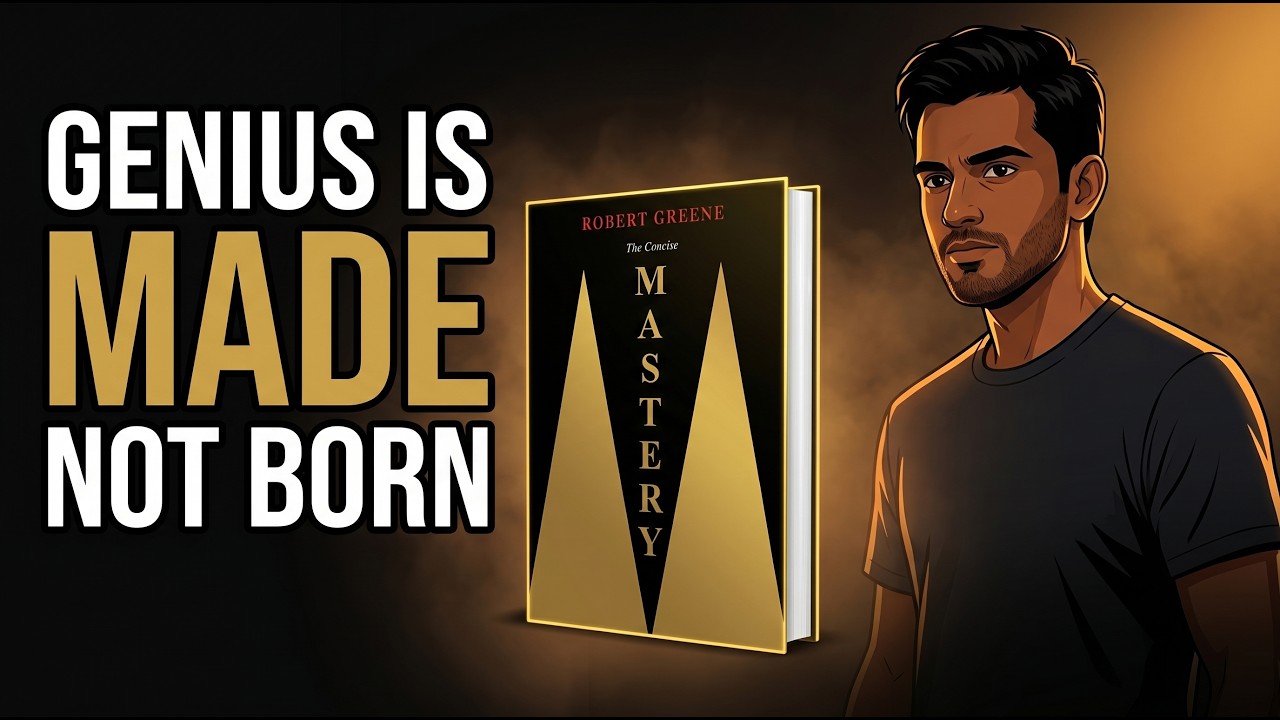
Ultralearning Summary: Learn Hard Skills Fast in the AI Age

Prefer to watch? Open the animated summary on YouTube.
In one lineTo keep up as AI changes work, learn hard skills fast: work on the real task, test yourself early, and practise your weakest step.
Key lessons
- Ultralearning is learning that is self-directed and intense. It is a response to AI changing your work.
- Rereading and watching videos feel like learning but build little. Testing yourself builds memory.
- Learn by doing the real thing in the setting where you will use it. This is called directness.
- Spend about a tenth of your time on research first. This is called metalearning.
- Find the slowest step in a skill, practise it alone, then put the skill back together.
- Ask for corrective feedback, which shows you how to fix the problem. A grade alone is not enough.
- Do not fill a leaky bucket. Review and use what you learned, or it fades.
On this page (10 sections)
You have a folder of online courses. You started three. You finished none. Meanwhile your office is bringing in new AI software that does part of your daily work. You know you must learn something new, but another course does not feel like the answer.
Ultralearning by Scott H. Young gives a different method. It is about learning a hard skill fast, on your own, by working on the real task.
What is Ultralearning about?
Scott Young is a Canadian writer who studied business. He published Ultralearning in 2019. In the book, he describes how he learned the content of MIT’s computer science degree in under twelve months, from his bedroom in Vancouver. He did not enrol. He used MIT’s free course materials, studied hard, and passed the same final exams.
Young is clear that this was not the same as an MIT degree. He wanted to see what was possible. From this and other cases, he builds a method for learning hard things quickly.
His definition of ultralearning has two parts. It is self-directed: you decide what to learn and how. And it is intense: it stretches you past what feels comfortable. Check any plan against both. A video course that you follow at one and a half speed fails the test.
Why a degree is no longer enough
Young writes that a degree used to promise a decent job. Now it barely gets you started. Many fields keep raising the skills they ask for. The book notes that middle-skill jobs, such as clerks, bookkeepers and travel agents, have been replaced by new technology. The new jobs split into two groups. Some need high skills, such as programmers and designers. Others need fewer skills, such as retail.
The economist Tyler Cowen put it as “average is over”. Young sees both a dark and a hopeful side. Education and hard work alone are no longer enough. But you can choose your response, and learning hard skills is one.
Note that the book was written before today’s AI tools. It never says that AI will take your job. It gives a response to a world that keeps changing.
Testing beats rereading
Rereading feels smooth, and smooth feels like learning. But in one study, students who closed the text and wrote down what they remembered did better than those who simply reread. They remembered almost fifty percent more. Yet the students had expected the opposite.
Young’s point is that testing yourself does not only check memory. It builds memory. So test yourself before you feel ready.
Try it now. Without scrolling up, can you say which city Young sat his MIT calculus exam in? Reaching for the answer makes the memory stronger.
Learn by doing the real thing
Schools promise “transfer”, meaning you can use what you learned in class on a new problem. Research shows this often fails. James Clear, who wrote the foreword, puts it like this: passive learning creates knowledge, and active practice creates skill.
Young’s fix is directness. Learn by doing the real task, in the setting where you will use it. Start with the task and let it tell you what to study.
A young architect from India, Vatsal Jaiswal, graduated into a very poor job market. He sent many applications and got no offers. Then he took a job at a print shop that printed building plans, learned a design program used by firms, and built a portfolio around a building he designed himself. He applied to just two firms and both offered him a job.
Make a map before you start
Another idea is metalearning, which means researching how to learn before you begin. The map answers three questions. Why are you learning? What exactly do you need to learn, split into concepts, facts and procedures? How have others learned it? Young suggests spending about a tenth of your total learning time on this. For a hundred-hour project, that is ten hours.
A map also shows your weakest spot, the part you would like to walk around.
Practise your weakest step
Young uses an idea from chemistry. In a chain of reactions, the slowest step sets the speed. Every skill has one. Find it, practise it alone until it is strong, then put the skill back together.
The book gives an example. Eric Barone made the game Stardew Valley alone. Pixel art was his weakest area, so he redid most of the art several times. The game later sold millions of copies.
Feedback: ask for the fix, not the grade
Feedback is not always helpful. A large review found that in more than thirty-eight percent of cases it made performance worse. Young names three kinds. Outcome feedback says pass or fail. Informational feedback says what is wrong. Corrective feedback shows how to fix it. He ranks corrective feedback highest.
Do not fill a leaky bucket
What you stop using fades. Young calls this the leaky bucket. One fix is spacing. An hour a day for ten days works better than ten hours in one day. After a project, decide if you will maintain the skill or aim to master it.
How to use this at work and at home
- Choose one skill your work now needs. Write why you want it in one sentence.
- Spend about a tenth of your planned time on research. Find out what skilled people in your field actually use.
- Pick a real project at work, such as rebuilding a monthly report in a new tool, and learn from the first day on real data.
- Close the video and test yourself from memory before you feel ready.
- Find your slowest step and practise only that.
- Ask a skilled colleague for a fix each week, not just a grade.
- After the project, schedule a short weekly session to keep the skill alive.
Our take
The strongest part of Ultralearning is that it is practical and honest. The testing idea and the real-project idea are well supported and easy to try. The bedroom story is also a good push to act.
There are weaker points. Young’s own challenges were done with big blocks of free time, which many working parents do not have. The book was written in 2019, before today’s AI, so it does not tell you which skill to pick. Some stories, such as the game maker, are about people who succeeded, and we hear less about those who did not. And a part-time project at work needs a manager who allows it. The intense style also suits some skills better than others.
Still, if you want a plan for learning something hard this month, this book gives one.
The animated summary walks through each idea with stories. It takes about 20 minutes.
Who should read Ultralearning?
Working professionals who have many half-finished courses, or whose daily tasks are changing as AI tools arrive, and who need to learn a new skill without going back to college.
Watch the full animated summary
Every idea from Ultralearning, told as a story in about 20 minutes.
As an Amazon Associate, we earn from qualifying purchases.