Mastery Summary: How Robert Greene Says Skill Is Built
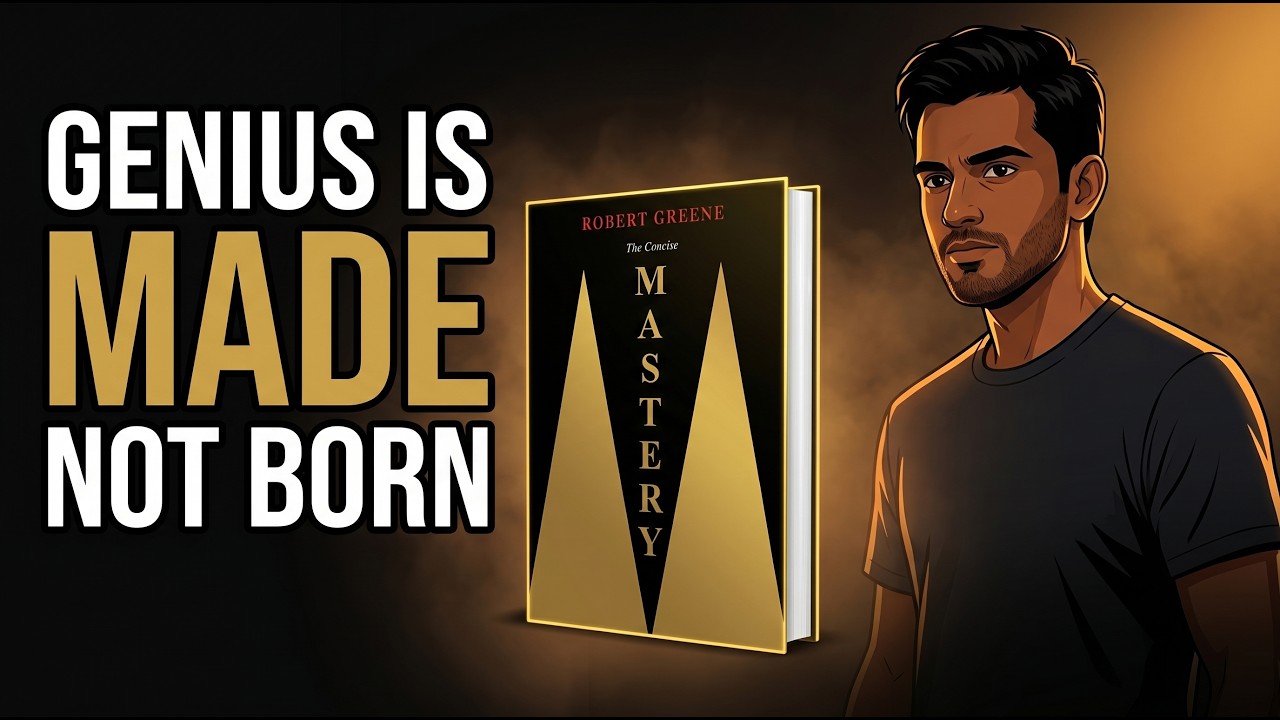
Prefer to watch? Open the animated summary on YouTube.
In one lineGreat skill is not a gift for a lucky few. It comes from a long, learnable path of calling, apprenticeship, mentors and years of deep practice.
Key lessons
- Mastery is a process almost anyone can follow, not a talent you are born with.
- Find your life's task: the work that fits your natural interests and inclinations.
- In the early years, choose learning over earning. A deep apprenticeship builds the base.
- Find a mentor. Direct guidance saves you years of trial and error.
- Build social intelligence. Skill alone fails if you cannot read and work with people.
- Once the basics are strong, start to experiment and create your own original work.
- There are no shortcuts. Deep skill takes many years of focused practice.
On this page (9 sections)
You look at the best person in your office, or the best in your field. It seems they were simply born with a gift. And a quiet thought follows: “I could never be like that, so why try?”
Mastery by Robert Greene says this thought is mostly a myth. When he studied the great masters of history, he found a path, not magic. That path is long and hard, but it can be learned, and it is open to many people.
What is Mastery about?
Robert Greene is an American author. He is also known for The 48 Laws of Power. He published Mastery in 2012, after studying the lives of famous masters and talking with several people at the top of modern fields.
His central idea is that mastery is the result of a process. He does not deny that people differ. His point is that what looks like natural genius is, in most cases, years of the right kind of effort.
This matters now because many people jump from job to job, chasing the next title or the next raise. Greene offers a different plan. Pick a field, go deep, and let the skill carry you.
Mastery is a process, not a gift
The first idea is the base of the whole book. The masters we admire were not made of different material. They followed a path of learning over a long time.
If you believe mastery belongs to the gifted, you can excuse yourself from trying. This belief feels safe, but it is costly. It keeps you from even starting.
Greene asks you to change the belief. See mastery as the outcome of a route that you can choose to walk. That change alone puts the goal within reach.
Find your life’s task
Greene says each person has a unique inclination, a kind of work they are drawn to. He calls this your life’s task. The masters usually followed work that fitted their real interests. They did not chase only money or status.
Why does this matter? The road to skill is long. Deep interest gives you the energy to keep going on dull days.
Look back at what has always pulled you. Maybe you stay up late fixing a spreadsheet, or you love explaining things to new joiners. These small signs point to your inclination. Then steer your career toward work that fits it, even if the first steps pay less.
Serve a real apprenticeship
The next idea is the first stage of the path. In an apprenticeship, your goal is to learn, not to earn. Greene says the masters accepted humble positions so they could absorb as much as possible.
Think of a young engineer in Pune. One job offers a higher salary but only routine tasks. Another pays less but puts her beside senior people who build hard systems. Greene would say the second job builds the deeper base.
There are no shortcuts here. The depth of your later skill depends on the depth of this stage. Watch closely, practise often, and be patient.
Find a mentor
A good mentor has already walked the path. They can give you honest feedback and show you mistakes before you make them. Greene says this can turn years of lonely struggle into focused growth.
Be active about it. Pick someone whose work you respect and ask a clear, small question. Show that you have done your homework. Then act on the advice and report back. A mentor helps most when they see that you listen.
Build social intelligence
Many talented people hurt their own careers because they misread others. They make enemies without meaning to, or they miss the politics around them.
Greene says social intelligence is part of mastery, not a distraction from it. You work with bosses, peers and clients. Your skill can only grow if these people support it.
Try to see people as they are, not as you wish them to be. Ask what each person wants and fears. This is not about tricking anyone. It is about avoiding the damage that comes from being naive.
Create, then practise for years
Once your base is strong, Greene says you can move from following the rules to using them. You begin to experiment and make something original. But he stresses that creativity works best on top of deep knowledge. Without the base, it stays shallow.
The final stage is a deep, almost intuitive command of the field. Experts at this level seem to know the answer without effort. Greene is clear that this takes many years of focused practice. You cannot skip it, and progress often feels slow.
How to use this at work and at home
- Write down what pulls you. List the tasks that absorb you. Look for a pattern, and aim your next job move at it.
- Choose learning over pay for a time. When you compare two offers early in your career, give weight to what you will learn.
- Find one mentor this quarter. Ask for thirty minutes, bring a specific question, and follow up with results.
- Study the people around you. Before a meeting, ask what each person wants from it.
- Practise daily, even briefly. Set aside a fixed hour for deep work on your craft and protect it.
Our take
The strongest part of this book is its message of hope. It replaces the excuse of “I was not born with it” with a clear path. The stress on apprenticeship and mentors is practical, and the social intelligence chapter adds something many skill books leave out.
There are weak points. The book leans on stories of famous people, and these stories can hide the many who worked hard and did not reach fame. Luck, money and chance also shape careers, and Greene gives them less room. The idea of a single life’s task can create pressure. Some people discover their interests slowly, or have several. And “learn first, earn later” is harder when you support a family or repay a loan.
Still, the core advice holds up. Pick a field, learn deeply, find guides and be patient.
The animated summary walks through each stage with stories and examples. It takes about 18 minutes.
Who should read Mastery?
Early and mid-career professionals who feel stuck or behind more naturally gifted colleagues, and anyone choosing a field to commit to for the long term.
Watch the full animated summary
Every idea from Mastery, told as a story in about 18 minutes.
As an Amazon Associate, we earn from qualifying purchases.


