The Art of Spending Money Summary: Why More Is Never Enough

Prefer to watch? Open the animated summary on YouTube.
In one lineA raise will not fix your spending if you spend to be seen, so buy what improves your own life and use what you keep to build independence.
Key lessons
- Money can be a tool for your own life or a yardstick to measure yourself against others.
- A lot of spending makes up for the past or for feeling small. Know which part of your pay does that.
- Wants usually grow as fast as income, so a raise often disappears.
- Status is a game with no winner, because a thing gives status only while others lack it.
- Showy spending creates social debt: other people start to expect more from you.
- Ask before a purchase: would I still want it if only my family saw it?
- Wealth is control over your own life. Build it on a ladder of independence, one step at a time.
On this page (10 sections)
Your salary is higher than your parents ever earned. Yet by the twentieth of the month, you are close to broke. You wonder where it went. The phone, the car loan, the dinners, the trips. None of them felt wrong when you paid.
The Art of Spending Money by Morgan Housel says the problem is not the amount. It is why we spend. A lot of spending is not for our own lives. It is for other people’s eyes.
What is The Art of Spending Money about?
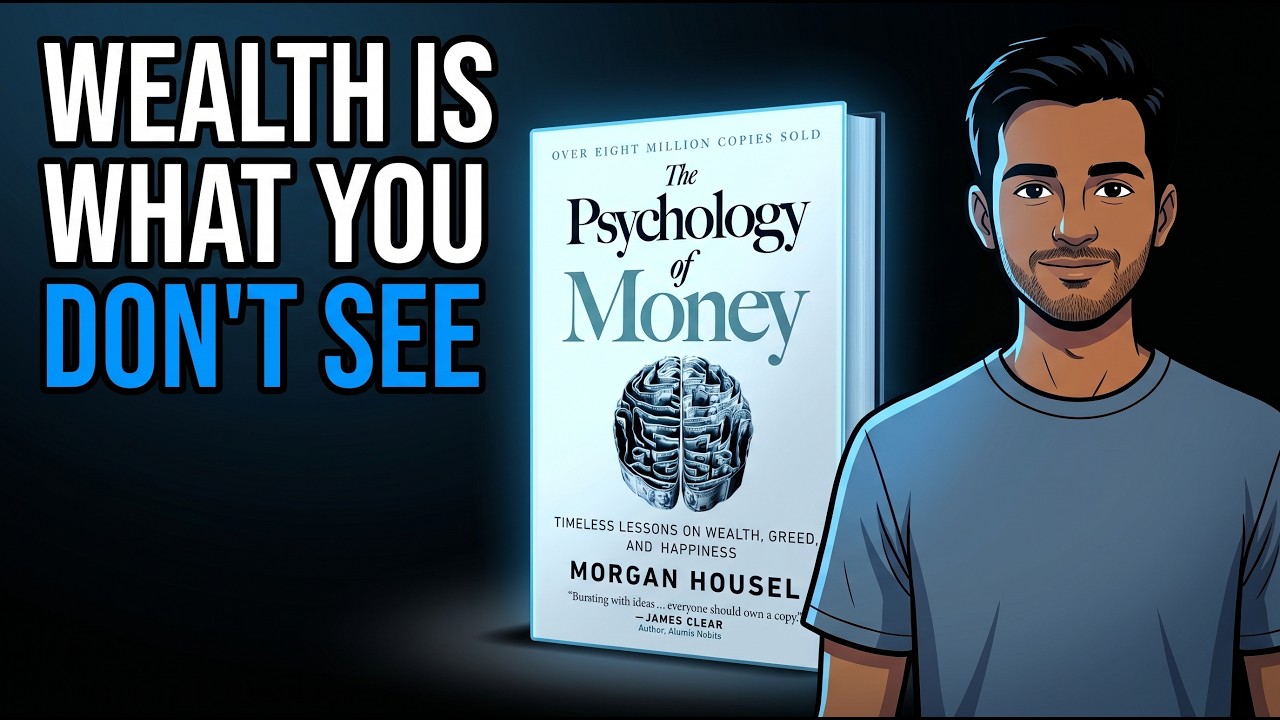
Morgan Housel is an American writer who also wrote The Psychology of Money. This book came out in 2025. His first book was about how money grows. This one is about how money is used.
The book is not about budgets. It is about the thoughts behind our choices. Housel’s central idea is that money can be used in two ways. It can be a tool, to build a better life for yourself. Or it can be a yardstick, to measure yourself against others. Most of us believe we use a tool. Look closely, and the yardstick is often doing more of the spending.
Why a raise does not fix it
Housel points to a simple finding. Ask people what income would make them happy, and most name about double what they earn now. This is true at almost every income level. The target moves with you.
He uses cars to show it. A cheap car makes you dream of a better one. After you buy that, you dream of a still better one. The brain does not really want the car. It wants the chase.
So say you get a thirty percent raise. Three months later it is gone. A new phone, a bigger flat, weekend trips with friends who also got raises. You were not careless. Your wants grew faster than your pay. And if wants grow faster than income, you will never feel rich.
Spending that makes up for something
Housel says almost any spending makes sense once you know the person’s past. A relative of his grew up poor and later told his daughter to pick the most expensive college that accepted her.
Some spending is a reward for a hard time. Housel calls it gasping, like a person who comes up for air after being held under water. A big purchase after a stressful year may be this. Ask which part of your pay buys your life and which part only makes up for something.
The status game has no winner
An investor named Josh Kushner once sat in great seats at a basketball game, and his friend pointed out that someone nearby had better ones. This is how the status game goes. A thing gives status only while others do not have it. Foreign holidays and degrees once did this. As more people got them, the signal faded.
Social media makes it harder. You compare your normal day with the best day of thousands of strangers.
Bills with no receipt
Housel describes a second cost, which he calls social debt. When your spending changes what people think of you, someone comes to collect. He writes about famous athletes who were not ruined by their own homes but by endless requests from relatives and friends.
You do not need to be famous. After a promotion, you may pay for every group dinner, give bigger wedding gifts and get asked for loans. There is also a bill you send to yourself. A new car makes a small scratch feel painful. And a car you buy to impress is really two purchases: the car, and the bigger one you will feel you need next.
Before you buy something people will see, ask what it will make them expect from you, and from yourself.
Wealth is control, not income
Housel compares two sportspeople. One earned over one hundred million dollars in his career and went bankrupt. The other earned far less, saved, and left sport to study mathematics. He is now a professor. Housel’s point: the wealthy one is the one who can choose. Wealth is not how much you earn. It is how much of your own life you control.
The book also quotes Warren Buffett’s question. Would you prefer to be the best investor in the world and be seen as the worst, or the worst and be seen as the best? Those who pick the second keep an outer scorecard. Those who pick the first keep an inner one.
Two questions before you buy
- Would you still want this if only your family could ever see it?
- If a perfect copy would bother you, what are you really buying?
Housel’s car example: a well-equipped Toyota is bought for the driver, with a comfortable seat and good sound. An entry-level luxury car at a similar price mostly says something to other people. A wine collector paid a huge sum for bottles said to be from an early American president, and many of his costly bottles proved fake. If a fake would taste the same, the money was paying for status.
Want less, and climb the ladder
Housel’s wife’s grandmother lived for decades on a small pension, yet seemed happier than the billionaires he had met. Your happiness with money lives in the gap between what you have and what you want. You can close the gap by earning more or by wanting less. The second is more in your control.
He also lays out a ladder of sixteen levels of independence. Near the bottom is cash for small problems. Higher up are bigger shocks and no card debt. Level seven is the freedom to quit a bad boss. Near the top is a year or more of living costs in cash. Every rupee you keep buys a piece of independence. You do not need the top to feel the change.
How to use this at work and at home
- Think of your last large purchase. Ask who it was really for.
- Before buying anything visible, ask the two questions above.
- Look at your last three months. Mark what improved your own life and what was about being seen.
- Set up an automatic transfer on salary day to a cash cushion. Start with one month of costs.
- Keep a few treats rare, so they stay treats.
- Be kind about other people’s spending. Everyone has a story.
Our take
The strongest part of this book is its honesty about status. It names a feeling many people have and rarely admit. The two questions are simple and work.
There are weaker points. Housel tells stories more than he gives data, and some are told to fit the point. The book gives less help with practical steps, such as how to build the cushion on a tight income. In India, family duties and caring for parents are real costs, and they are not the same as showing off. A bigger raise can also solve real problems for people who are truly short of money.
Still, as a way to think about why we spend, it is thoughtful and easy to read.
The animated summary walks through each idea with stories. It takes about 20 minutes.
Who should read The Art of Spending Money?
Salaried professionals with a good income who feel short of money by the end of the month, and anyone who spends to keep up with colleagues or relatives.
Watch the full animated summary
Every idea from The Art of Spending Money, told as a story in about 20 minutes.
As an Amazon Associate, we earn from qualifying purchases.