
Mini Habits Summary: Why Tiny Steps Beat Big Goals
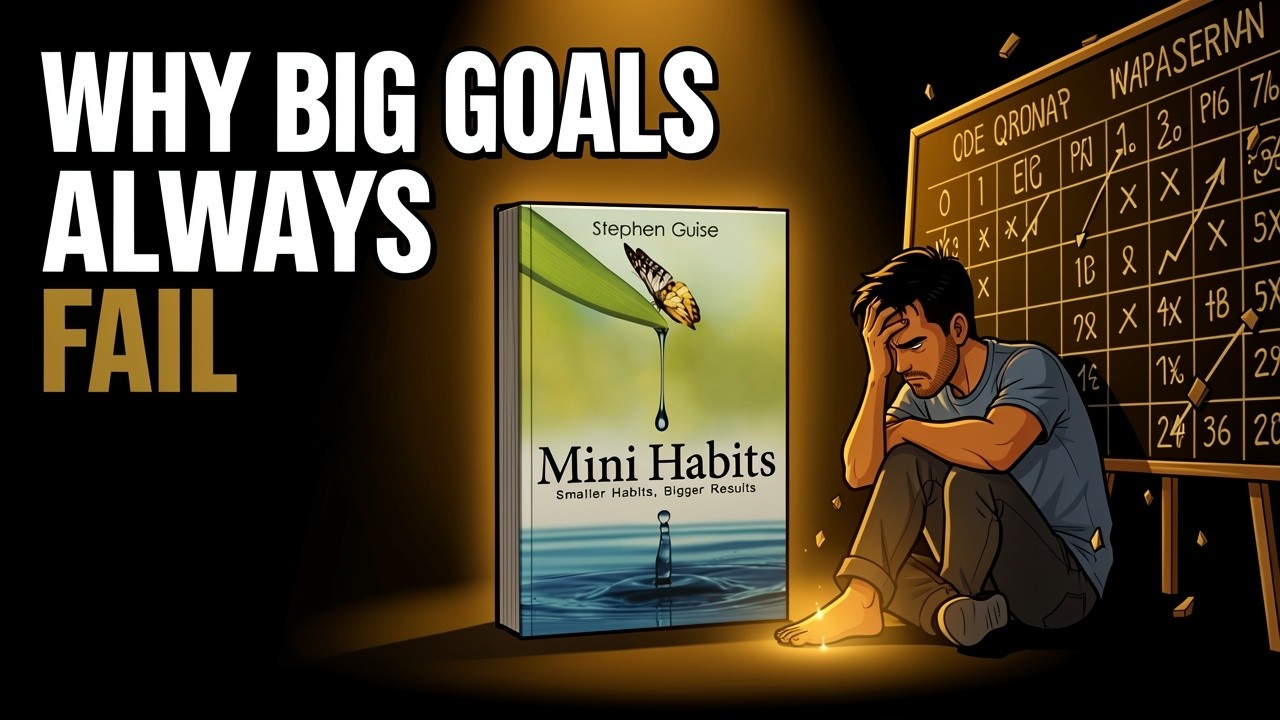
Prefer to watch? Open the animated summary on YouTube.
In one linePick a daily action so small it feels silly, do it every day, and let that low bar build a lasting habit.
Key lessons
- Big plans fail when motivation fades. A tiny daily action is too small to fail.
- Motivation changes with mood, sleep and stress, so do not build a plan on it.
- Willpower is more reliable than motivation, and you can train it.
- Tiny tasks avoid the main drains on willpower: effort, difficulty, bad feelings, tiredness and low energy.
- Starting is the hard part. Once you begin, you often do more.
- Never secretly raise the bar. The small target is the real target.
- Aim for consistency, not intensity.
On this page (9 sections)
You decide to exercise daily, write three thousand words or read a book each week. For a few days you feel strong. Then you wake up tired, the energy is gone, and the goal feels impossible. You quit, and you feel worse than before.
Mini Habits by Stephen Guise says the problem was not you. The problem was the plan. When the goal is too big, it breaks on the first hard day. Guise suggests the opposite: make the daily goal so small that you cannot fail.
What is Mini Habits about?
Stephen Guise is an American writer who published Mini Habits in 2013. His central idea is simple. A mini habit is a very small positive action that you force yourself to do every day. Examples are one push-up, fifty words of writing, two pages of reading or two positive thoughts.
These targets feel almost meaningless. That is why they work. They are too small to fail, so you build a record of keeping promises to yourself. In a world of big goals and instant results, this feels slow. But it keeps you moving when other plans stall.
Why big intentions fail
Guise says big intentions are worthless if they bring no results. You can tell friends you will train for two hours every day. If you do not, the size of the plan changes nothing.
Worse, each failed plan hurts your confidence. People also overestimate their self-control. There is a gap between what we want to do and what we can make ourselves do. Mini habits close the gap by making the demand tiny.
How your brain handles habits
Guise describes two parts of the brain in simple terms. The prefrontal cortex, behind your forehead, is the thinking part. It understands long-term results and wants you to exercise and save. But it tires quickly, like a manager who works a short shift.
The basal ganglia is a deeper part that repeats patterns. It does not think about results, but it never runs out of energy, and it runs habits on autopilot. Habit-building means teaching this part to automate what the thinking part wants. The only language it understands is repetition.
Why motivation is a weak engine
Many self-help books say to get motivated. Guise disagrees. Motivation depends on how you feel, and feelings change with sleep, stress and a bad morning. A plan built on motivation is a house on water.
He prefers willpower. It is more reliable, because you act whether you feel like it or not. It can be strengthened with practice, and you can schedule it in your calendar.
But willpower is limited, too. Guise lists five things that drain it: effort, difficulty, negative feelings, tiredness and low blood sugar. A tiny task keeps all five low. A Mumbai office worker who commits to one push-up after a ten-hour day will still manage it.
The Trojan horse effect
Your brain resists big changes. Guise compares a mini habit to a Trojan horse. It slips past that resistance because it looks harmless. Once you begin, momentum often takes over. On some days you do only the minimum, such as one push-up. On other days that start leads to a long session. Both days count as a win.
Three hard truths
First, the idea that habits form in twenty-one days is a myth. Guise says it often takes much longer. So he sets no end date. He asks you to watch for signs instead: you feel little resistance, you see yourself as someone who does it, and you stop worrying about it.
Second, do not cheat the system. The most common cheat is to set one push-up while secretly expecting thirty. That hidden demand drains willpower. The small target is the real target, and anything extra is a bonus.
Third, high expectations on the daily process can backfire. If you must write two thousand words every day, one bad day feels like a failure. With a tiny bar, you cannot have a bad day.
Signs that a habit has formed
Guise does not ask you to count days. He asks you to watch yourself. A habit has formed when you feel little resistance to doing it. You start to see yourself as the kind of person who does it. You do it without a long debate, and you no longer worry about it.
When you reach that point, you can think about a second mini habit. Do not add too many at once, because each new habit asks for willpower. Keep the list short, let one habit settle, and only then add the next.
How to use this at work and at home
- Choose one to four mini habits. Keep the list short and pick what matters most now.
- Ask “why” for each habit, and ask again, until you find the real reason behind it.
- Attach each habit to a cue, such as a time (“at nine in the morning”) or an event (“after lunch”).
- Reward yourself after you finish. Even a small treat or a moment of pride helps your brain repeat it.
- Write it down and tick it off each night. If you feel strong resistance, make the task smaller.
Our take
The strongest part of the book is its respect for how people behave. It accepts that tired people skip big plans, and it builds a method around that. The advice not to cheat with a hidden bigger goal is also useful, because many people break their own systems this way.
There are weak points. The science is described in a simple way, and the brain model is a rough picture, not a full account. A one-push-up habit will not make you fit by itself. You may need a plan to grow once the habit is stable, and the book says less about how to do this. Some readers will also find the pace too slow if they already have good discipline.
Still, for anyone who has quit many times, a tiny start is a fair place to begin.
The animated summary shows each idea with simple stories. It takes about 10 minutes.
Who should read Mini Habits?
People who start new routines with great energy and quit within weeks, and anyone who feels guilty about missed goals.
Watch the full animated summary
Every idea from Mini Habits, told as a story in about 10 minutes.
As an Amazon Associate, we earn from qualifying purchases.


