Hanuman in Valmiki's Ramayana: What Made Him Unstoppable?

Prefer to watch? Open the animated summary on YouTube.
In one lineIn Valmiki's Ramayana, Hanuman is carried through his mission by four qualities of mind, not by his strength.
Key lessons
- On the shore, Hanuman sat apart and claimed no jump, yet he was the one who could cross.
- Rama's first praise of Hanuman is for how he speaks, not for his strength.
- A verse in Book 5 names four qualities that mean a person will not fail: courage, vision, intellect and skill.
- Good sense: when Hanuman guessed wrong about a sleeping queen, he reasoned his way back.
- Steadiness: after a night of searching, he nearly lost hope, then chose to search again.
- Clear sight: when Lanka burned, he went to see Sita with his own eyes rather than trust his fear.
- Skill: knowing which tool the moment needs, such as lifting the whole mountain of herbs.
On this page (9 sections)
Everyone calls Hanuman unstoppable. He crossed the sea, burned Lanka and carried a mountain. But in Valmiki’s Ramayana, he also searched all of Lanka, found nothing, and nearly gave up.
So what got him moving again? If it was his strength, we can only admire him. If it was something else, we might learn it.
What is this episode about?
This page follows Hanuman through the Valmiki Ramayana, from Book 4 (Kishkindha) through Book 5 (Sundara) to Book 6 (Yuddha). The poem celebrates his strength. But one verse about why a person never fails is about something else. It names four qualities, and none of them is physical.
Tradition credits the whole poem to Valmiki. Many traditions tell Hanuman’s story, and many people hold him sacred. This page reads one text only and does not rank other tellings.
The one who sat apart
The vanaras, the forest people of Kishkindha, stand on the shore. Each one claims a jump, starting at ten yojanas. A yojana is an old measure of distance. The claims climb to ninety for Jambavan, the old bear-king. Prince Angada claims the full hundred, but cannot promise to return. Jambavan says a leader cannot be the one sent.
That leaves Hanuman, who sits apart and has claimed no number. Jambavan asks why he says nothing, then reminds him who he is. You may have seen this in a team. Everyone lists what they can do. The one who could really do it stays quiet.
What Rama noticed first
Hanuman first meets Rama in the forest. Sugriva, the vanara king, is afraid of two armed strangers, and his ministers run. Hanuman stays and goes to read them.
He opens with praise, and the brothers say nothing. So he sets praise aside and says plainly who he is. Rama then turns to Lakshmana. Only someone who has learned well could speak like this, he says. Not one word was wrong. Hanuman is known as the strongest of them all, but on the first day, Rama notices how he speaks.
The verse with four qualities
Hanuman then flies across the sea. A mountain called Mainaka offers rest, and he refuses because he has given his word. Surasa tests him, and he shrinks and slips out of her mouth. Simhika grips his shadow, and he tears her apart from inside.
Voices in the sky then name the four qualities. In Book 5, canto 1, whoever has courage, vision, intellect and skill will not fail in any task. This page calls them steadiness, clear sight, good sense and skill. The word “fail” in that line also carries the sense of sinking down or despairing. So “unstoppable” here means a person who never stays down.
Which scene shows which quality is this episode’s reading, not the poem’s.
Good sense and steadiness in Lanka
Hanuman enters Lanka at night, the size of a cat. He searches the palace and sees a sleeping queen so lovely that he thinks she is Sita. He is overjoyed. Then he stops and thinks. Sita would not sleep in comfort away from Rama. So this must be someone else. He guessed wrong, and he fixed it by thinking. That is good sense: working out what must be true from what you already know.
Next he searches house after house, and Sita is in none. At his lowest, he asks whether he should live at all. Then he reasons his way back. He decides to search again, starting with the grove he has not yet checked. Steadiness works like a keel under a boat. You never see it, but it keeps the boat from tipping over.
Clear sight and skill
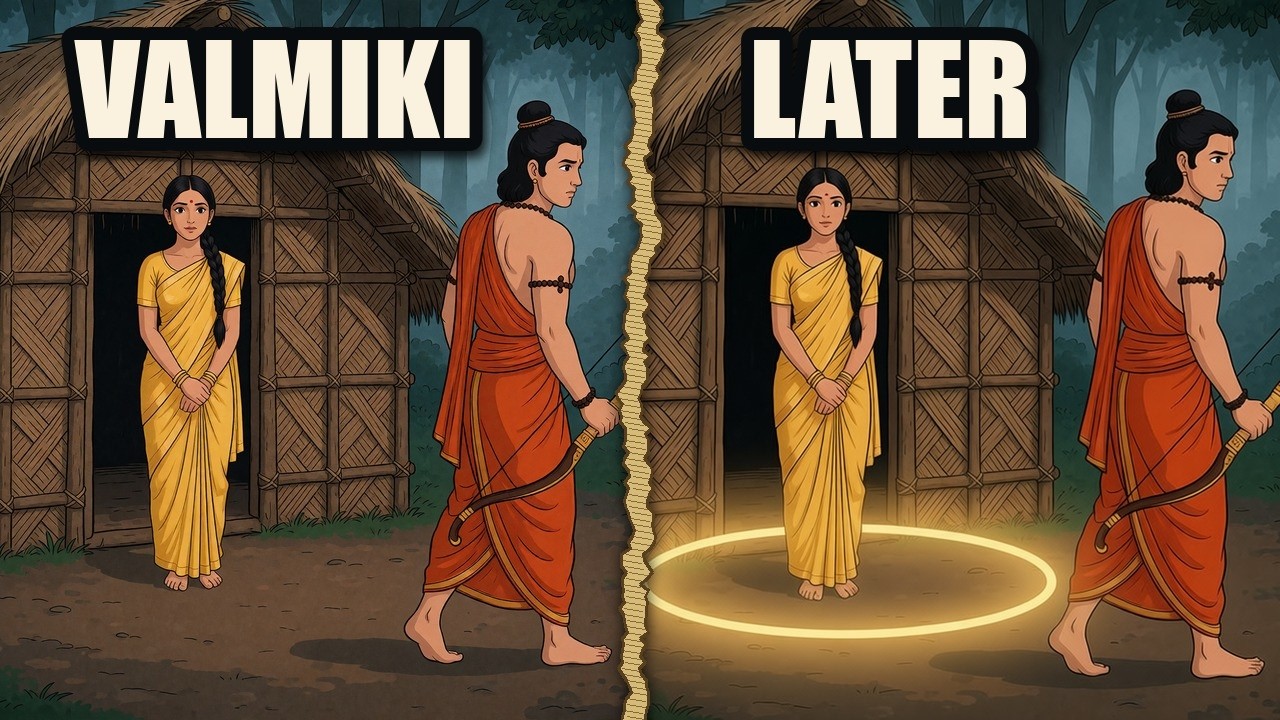
In the Ashoka grove, he finds Sita. He chooses plain speech over learned speech, because she might think he is Ravana in disguise. He shows her Rama’s ring. He offers to carry her home that night. She refuses. Her reasons belong to the next episode.
Later he lets Indrajit’s weapon bind him so that he can meet Ravana. He tells Ravana that keeping Sita is a noose he hung around his own neck. Ravana orders his tail set alight. Hanuman then burns the houses of Lanka, but not Vibhishana’s.
As Lanka blazes, he is struck with shame at his own anger and fears the fire has reached Sita. Then he reasons that the fire is not burning his own tail, and goes to see her for himself. Seeing for yourself is clear sight. He did not trust his fear.
Skill appears in the war. Jambavan names herbs on a distant peak to heal the army. The first time, Hanuman lifts the peak in a rage. The second time, he cannot tell the herbs apart, thinks first, and brings the whole peak. Skill is knowing which tool the moment needs.
Strength was never first
At the coronation, Sita gives Hanuman a pearl necklace for the qualities Rama lists. The list includes strength, but also firmness, skill and intelligence. The Hanuman Chalisa, a later hymn by Tulsidas, begins with a prayer for strength, then intelligence, then learning.
Book 7, the later book, adds that sages cursed Hanuman so he would forget his strength. In this reading, his strength needed someone to remind him. His judgement did not.
How to use this at work and at home
- When you guess wrong, ask what must be true, and fix it by thinking. Do not just feel bad.
- When you search and find nothing, search again in a place you have not looked.
- When you are afraid, go and look at the facts yourself.
- Match the tool to the moment. A mountain-lifting effort is not always the right one.
- Do not wait for others to name your strengths. Speak plainly when your skill is needed.
What this means today
The strongest point of this reading is that it treats resilience as something you can practise. Courage, sight, sense and skill are habits of mind, and they can grow. Many people will find that more useful than a story about superhuman power.
Readers should know the limits. The assignment of each scene to a quality is the episode’s own reading, not Valmiki’s. Other readers may map them differently, and many will simply value Hanuman for his devotion. The animated episode follows his journey scene by scene with the canto for each. It takes about 22 minutes.
Who should read Valmiki Ramayana: Hanuman's Journey (Kishkindha, Sundara, Yuddha)?
Readers who know Hanuman as the strongest vanara and want to see what the text says carried him through, especially when work feels hopeless.
Watch the full animated summary
Every idea from Valmiki Ramayana: Hanuman's Journey (Kishkindha, Sundara, Yuddha), told as a story in about 22 minutes.