Breath Summary: How to Breathe Better, by James Nestor
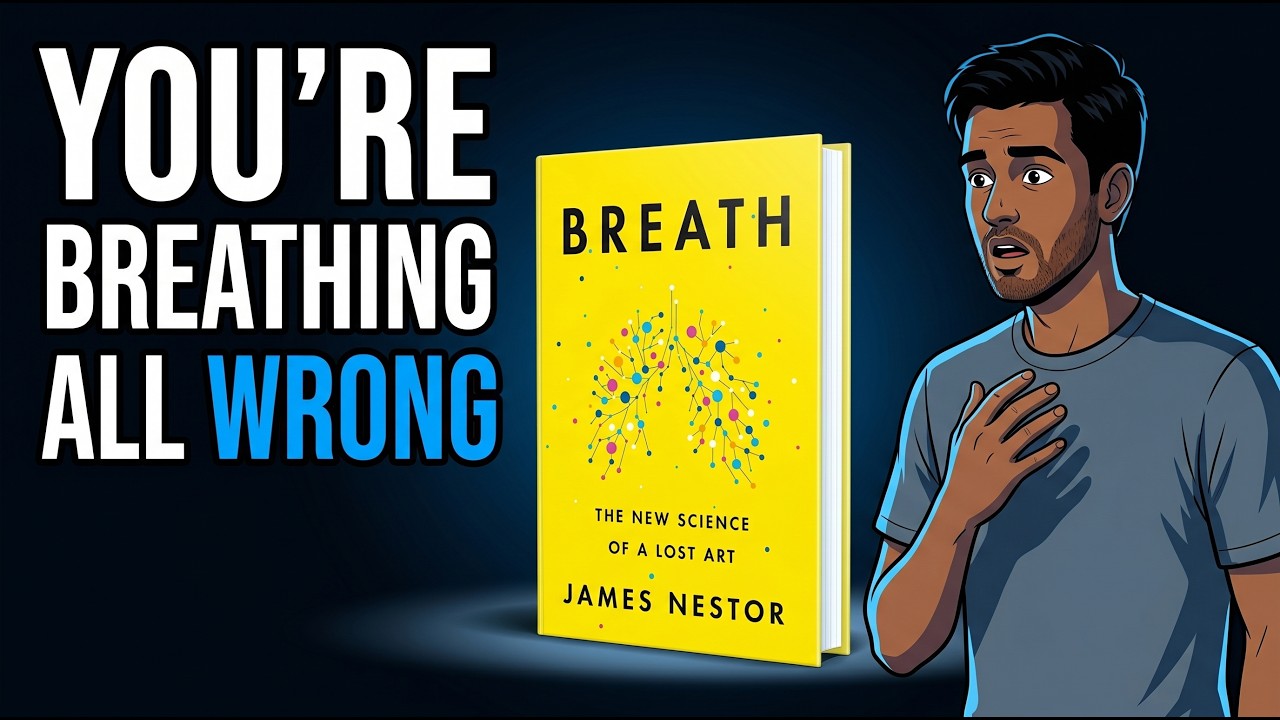
Prefer to watch? Open the animated summary on YouTube.
In one lineMost people breathe too fast, too much and through the mouth; breathing slowly and gently through the nose can help sleep, stress and health.
Key lessons
- How you breathe affects your sleep, stress and energy, and you can change it.
- Make nose breathing your default, day and night, because the nose filters, warms and moistens the air.
- Most people over-breathe. Slower, lighter breaths are usually healthier than big, fast ones.
- Carbon dioxide matters too, not only oxygen, and slow breathing supports a healthy balance.
- Soft modern food and little chewing may have narrowed our jaws and airways.
- Slow, calm breathing is a quick tool for stress and anxiety.
- This is general information, not medical advice. See a doctor for real breathing problems.
On this page (8 sections)
You take around twenty thousand breaths a day, and you almost never think about any of them. Yet many of us sleep badly, wake up tired, snore, and feel tense by evening. We try apps, supplements and new routines. We rarely look at the one thing we do every few seconds.
Breath by James Nestor says the way you breathe matters more than you think. He argues that many people breathe in ways that quietly work against them, and that a few simple changes can help.
What is Breath about?
James Nestor is an American journalist. He wrote Breath: The New Science of a Lost Art, published in 2020. He spent years studying the science, the history and the old practices of breathing. He also tested ideas on himself.
His central claim is simple. Breathing is not just a background job. It is a lever you can use. Most of us breathe through the mouth, too fast and too much. Nestor says that learning to breathe through the nose, more slowly and more lightly, can improve sleep, calm and physical health.
This matters now because we spend long hours sitting, looking at screens and feeling stressed. Short, shallow breaths often come with that life, and we do not notice them.
Why does the way you breathe matter?
The first idea is that breathing affects far more than your lungs. It shapes the balance of gases in your body, your nervous system, your sleep and your stress levels.
Think of a busy day at the office. A deadline arrives, your chest tightens, and your breaths become quick and high in the chest. You may not notice, but your body now reads this as a signal of danger. You feel more tense, and the cycle continues.
The good news is that, unlike your heart rate, you can change your breathing on purpose. That makes it a rare tool: it works automatically, but you can take control of it whenever you wish.
Why breathe through your nose?
This is the most practical lesson in the book. Nestor says the nose is built for breathing. It filters, warms and moistens the air before it reaches your lungs. The mouth does none of this well.
Mouth breathing, especially during sleep, is linked in the book with snoring, poor sleep and other problems. Many people slip into the habit without noticing. A blocked nose during the day, or a dry mouth when you wake up, may be a hint.
A simple step is to notice. Several times a day, check whether your lips are closed and the breath is coming through your nose. When you walk, work or relax, aim for nose breathing as your normal way.
Why slower and less is better
Many of us think that deep, big breaths are always healthy. Nestor gives a more careful picture. Most people over-breathe. They take too many breaths and move too much air.
He also points to carbon dioxide. We think of it as a waste gas, but your body needs the right amount of it. Slow, gentle breathing helps keep that balance. In the book, a calm rhythm is one of the best ways to settle the nervous system.
So the goal is not bigger breaths. It is slower, softer and quieter ones. Imagine you are waiting outside your manager’s cabin before a hard meeting. Instead of three fast, heavy breaths, breathe in gently through the nose, then let the breath out slowly. Do this for a couple of minutes. Many people feel calmer.
Have we lost the art of breathing?
Nestor also looks at the body. He argues that modern life has changed our anatomy. Compared with people in the past, we tend to have smaller mouths, more crowded teeth and narrower airways.
Part of his explanation is food. Soft, processed meals need little chewing, and he suggests this may leave jaws and airways less developed. In his view, poor breathing is therefore not only a bad habit. It can also be linked to how our bodies grew.
This is a bigger claim and a harder one to check. Treat it as an interesting idea rather than a proven rule. The simple lesson that remains is that your mouth, jaw and airway are connected to how you breathe.
Breath as a tool
The last idea is that breath can be used on purpose. Nestor explores several old breathing practices. Slow, calm breathing can ease stress and anxiety within minutes. Other, more intense methods are said to affect energy and resilience.
For most readers, the first kind is enough. A few slow breaths before a call, a talk or a difficult conversation cost nothing and need no equipment. Use stronger methods only with care, and speak to a doctor first if you have a health condition.
How to use this at work and at home
- For one day, notice your breathing. Is it through the nose or the mouth? Is it fast or slow?
- Make nose breathing your default when you walk, sit and work.
- Before a stressful moment, take two minutes of slow, gentle breaths. Breathe in through the nose and let the breath out slowly.
- Look at the quality of your sleep. If you snore or wake with a dry mouth, talk to a doctor about it.
- Chew your food well, and treat this as a small way to look after your jaw and airway.
Our take
The strongest part of the book is how easy it is to try. Breathing costs nothing, and the advice to breathe through your nose and slow down is gentle and low risk. Nestor also writes in a lively way, with many stories, which makes a dry topic easy to follow.
There are limits. Nestor is a journalist, not a doctor, and some of the claims are stronger than the evidence we have. The ideas about jaws, diet and the shape of the face are interesting but not settled. Some of the more intense breathing methods need care. Breathing exercises will not cure serious sleep or health problems.
So take the book as a good prompt to pay attention, not as a promise. If you have trouble breathing, long-term snoring or serious anxiety, see a doctor. For everyone else, a few weeks of calmer, nose-based breathing is an easy experiment.
The animated summary goes through each idea with stories and clear examples. It takes about 20 minutes.
Who should read Breath: The New Science of a Lost Art?
Anyone who sleeps badly, snores, feels stressed all day, or sits long hours at a desk and wants a free habit that can help how they feel.
Watch the full animated summary
Every idea from Breath: The New Science of a Lost Art, told as a story in about 20 minutes.
As an Amazon Associate, we earn from qualifying purchases.